
Development
Online store development
We launch a sales-ready store: structure, design, modules and content — with a technical base for search promotion from the start.
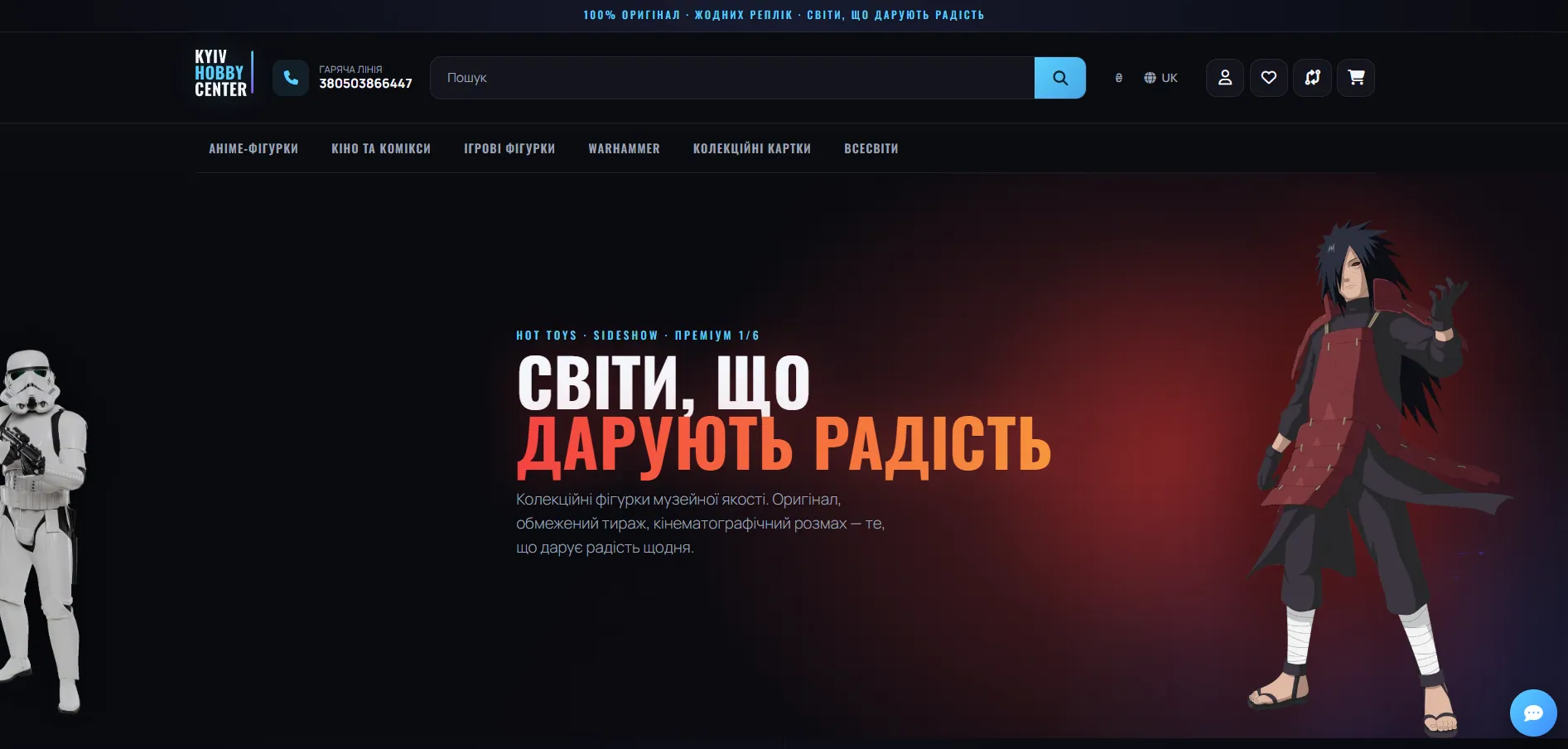
Online store development is the launch of a sales-ready site without a headache for the owner: from the catalog structure and design to modules, content and SEO. The SEO Bundle studio designs a store so it not only looks good but also promotes in Google from day one. You get a working sales tool, not just a "site".
What "turnkey" means
Turnkey means we cover every stage with our own team: design planning, visual design, development, integrations, content and preparation for promotion. You do not need to find a designer, a coder, a programmer and an SEO specialist separately and reconcile them — the team works as one.
This approach removes the main problem of assembled projects, when a nice design cannot be coded properly and a finished site cannot be promoted without rework. We agree on these layers in advance, so the store comes out whole and manageable.
What store development includes
The scope depends on the task, but the base set covers the whole path from idea to launch. Below is what is included and what it gives the business.
| Stage | What we do | Result |
|---|---|---|
| Planning | Catalog structure, prototypes of key pages | Logic clear to a buyer and to search |
| Design | A unique brand design, responsive layout | A recognizable, convenient store |
| Development | Markup, CMS setup, custom modules | A fast and stable site |
| Integrations | Payment, delivery, inventory systems | Readiness to take orders |
| Content and SEO | Semantics, texts, microdata, clean URLs | A store ready for promotion |
When needed the scope expands: multilingual support, B2B features, marketplace integration, loyalty programs. We discuss the scope before the start, so the estimate stays transparent.
Stages of work
The process is built so you see a result at each step, not only at the end.
- Brief and niche analysis: goals, competitors, assortment;
- Structure and prototypes: the catalog tree and page logic;
- Brand design and its approval;
- Development, modules and payment and delivery integrations;
- Content, SEO preparation and testing;
- Launch, training and further support.
Each stage has an approval point, so edits come in on time and do not turn into expensive rework after launch.
Which platform we build stores on
The main platform is OpenCart: flexible, open and well suited to customization and module development. For the task we work with other systems too, choosing the one that fits your assortment and budget best.
The platform is chosen for the project, not the other way around. A small catalog needs ease of management, a large one needs performance and convenient filters. The specifics of promoting different systems are gathered in the SEO by CMS section.
OpenCart suits the Ukrainian market well: there are localizations, payment and delivery modules for local services and an active community. Open code lets us refine the system without the limits of a boxed solution, which matters for non-standard tasks and a growing assortment.
A unique brand design
A template store gets lost among hundreds of similar ones. We make the online store design for your brand: corporate colors, clear product cards, a convenient cart and checkout. The design is planned responsive from the start, so it works the same on a phone and a desktop.
Convenience directly affects conversion: the simpler the path from a card to payment, the more completed orders. So we build the interface around buyer scenarios, not around nice but useless effects.
Custom modules for your tasks
When standard features are not enough, we develop custom modules: non-standard filters, calculators, integrations, exports. This removes the limits of boxed solutions and lets a store work exactly as your business needs.
We have already built custom modules for real projects, so we know where a boxed solution breaks under growth. More on such refinements is on the page about OpenCart module development.
SEO from day one
Most often stores are rebuilt precisely because of SEO: the structure is not built for demand, duplicates, slow loading. We build optimization in at the planning stage. First we collect the semantic core, on its basis we build the catalog and filters, then set up clean URLs, microdata and speed.
A store designed for search does not need to be "fixed" after launch — it can go straight into the top. Further SEO promotion moves faster because the foundation is already right.
Integrations and sales features
A store should take orders without manual work, so we connect payment systems, delivery services and, when needed, warehouse and inventory software. The buyer sees current prices and stock, and you see orders in one place.
The set of integrations is chosen for the business processes: some need only card payment and one delivery service, others need stock synchronization with accounting and export to marketplaces. We implement what really saves your time.
Support and growth after launch
Launch is not the finish but the start of a store's work. We stay in touch: we update the platform and modules, add pages for new demand, watch over speed and stability. So the store does not age technically and keeps growing in results rather than freezing right after handover.
As the assortment and traffic grow, new tasks appear: extra filters, promotions, marketplace integrations. We develop the store in iterations, relying on analytics data, rather than rebuilding it entirely each season. This approach saves budget and keeps the accumulated positions.
A multilingual store
For the Ukrainian market, Ukrainian and Russian versions are often needed, and for export an English one. We build multilingual support into the structure from the start: separate URLs, correct hreflang and translated cards rather than on-the-fly machine translation. This protects against typical indexing problems with language versions.
We collect semantics for each language separately, because demand and phrasings differ. This lets each language version rank for its own queries rather than duplicate the same page under different addresses.
Cases and experience
Behind the team are real turnkey online stores: design, custom modules and follow-up promotion. This experience shows which decisions work under growth and which create problems, and helps avoid repeating others' mistakes.
Examples of projects and niches we have worked with are gathered in the cases section. If you have a similar task, we will pick a close example and show how we solved it.
Who turnkey store development suits
The turnkey format benefits those who have no in-house development team and no time to manage contractors. These are a new business going online, an offline store opening sales on the internet, and owners of outdated sites who need online store development from scratch instead of endless edits.
If a store already exists but is slow, inconvenient or does not promote, building it anew on a fresh basis is often cheaper than patching the old one. We move the catalog and keep the positions rather than starting from a blank page at the expense of SEO.
How we differ from builders and freelancers
Site builders give a fast start but hit a ceiling: limited filters, a template look, SEO problems under growth. Ordering a turnkey store from a studio costs more than a builder, but you get a unique design, the needed features and a site that really promotes.
A single freelancer covers one role, while a store needs design, development, modules, content and SEO at once. When one team runs the build, the layers are aligned, and on a problem no one points at a neighbor.
Which mistakes we prevent
Most store problems are set at the start. We remove them in advance.
- A structure not built for demand — the catalog has to be rebuilt with a loss of positions;
- Duplicate filter and sorting pages with no indexing setup;
- Slow loading from a heavy template and unoptimized images;
- An inconvenient card and cart that lower conversion;
- A site that technically cannot be promoted without rework.
Preventing these mistakes at the planning stage is cheaper than fixing them on a working store with traffic and orders.
What the cost depends on
There is no single price for a store: a landing showcase and a catalog of thousands of products differ in labor by several times. So we calculate the cost per project after a short brief.
- The catalog size and structure complexity;
- The uniqueness of the design and the number of page templates;
- The needed modules and integrations;
- Multilingual support and the volume of content;
- The depth of SEO preparation at the start.
A turnkey package — design, modules and SEO by one team — is usually more profitable than gathering contractors separately and paying to join their work. We name the exact estimate after getting to know the task.
How to order
Starting takes one conversation — a detailed brief from you is not required.
- You leave a request and describe the niche, assortment and goals;
- We agree on the structure, design direction, timelines and estimate;
- We build the store by stages with approval points;
- We launch, train you to work with the site and support it after the start.
To discuss a project, write to us on Telegram — we will suggest the optimal platform and scope of work for your budget.
Frequently asked questions
How long does turnkey store development take?
A small store can be launched in three to five weeks, a large catalog with integrations in one and a half to three months. Exact timelines depend on the scope and are fixed in the plan before the start of work along with the list of features.
How much does a turnkey online store cost?
The cost depends on the catalog size, the uniqueness of the design and the set of modules and integrations. We name the exact estimate after a short brief, so the price matches the real scope rather than an average package for everyone.
Which CMS do you recommend for a store?
Most often we use OpenCart for its flexibility and room for customization. For a specific task we choose the platform individually, based on the assortment, budget and growth plans of the project.
Do you do SEO for a new store?
Yes, SEO is built in at the planning stage: semantics, structure, clean URLs and microdata. After launch we can take the store on for full search promotion and run it further on analytics data.
What does support after launch include?
It is updates, feature refinement, adding pages for new demand and stability control. We agree on the scope of support separately, depending on how actively the store develops.